

Illustrating Leadership: Benazir Bhutto -Portraits of Inspiring Figures in History

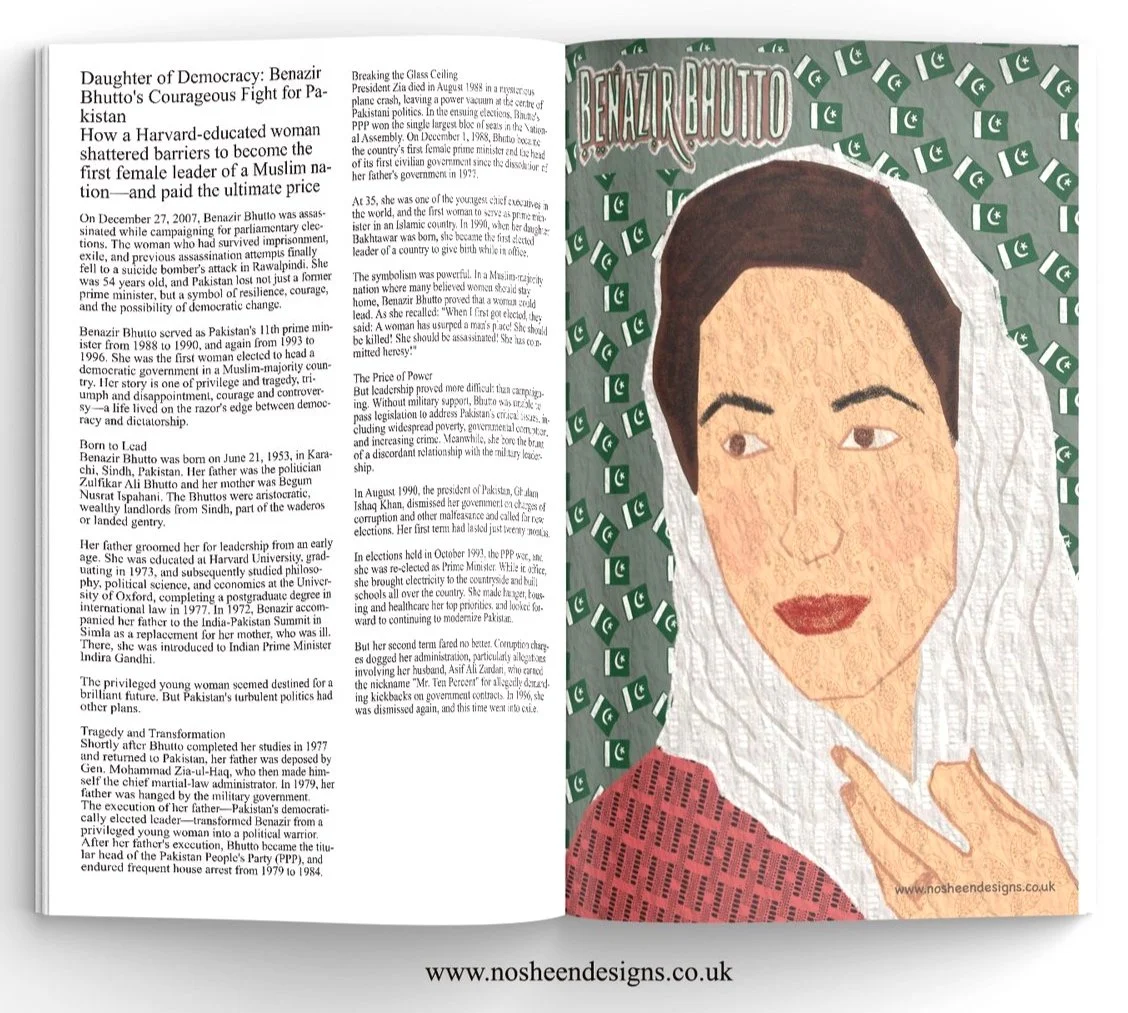
Portraits of Inspiring People: Illustration as Storytelling
Portraits are never neutral. Every face carries history, contradiction, power and consequence. When I create portrait illustrations, I'm not interested in surface likeness alone - I'm interested in what a person stands for, how they shaped the world around them, and how their legacy continues to influence us.
This ongoing series of portraits explores individuals who broke boundaries, challenged systems, and left a lasting mark on history - often in complex and contested ways.
The people illustrated include Malala Yousafzai, Nelson Mandela, Margaret Thatcher, Benazir Bhutto, Abraham Lincoln, Mahatma Gandhi, Muhammad Ali, Jacinda Ardern, Ellen Johnson Sirleaf, Megawati Sukarnoputri, Winston Churchill and Barack Obama.
Why these portraits exist
These portraits are not about celebration or condemnation. They are about understanding power, leadership and impact.
I'm drawn to figures who:
changed the course of history
challenged existing structures
represented moments of cultural, political or social shift carried contradictions alongside achievement
Some of these individuals are widely admired, others polarising. That tension is intentional. History is not simple, and illustration has the power to hold complexity without flattening it into slogans.
A narrative approach to portrait illustration
Each portrait is created as a narrative image, not a decorative one.
Rather than focusing solely on facial likeness, I incorporate:
symbolic colour palettes
patterns and textures
cultural, political or personal motifs
visual references to achievement, struggle or legacy
For example:
• textiles and patterns that reference heritage and identity
• colour used to suggest resilience, authority or resistance
• layered textures that reflect struggle, endurance or change
These elements allow the illustration to tell a story beyond the face - one that invites the viewer to pause and reflect.
Technique and process
All portraits are hand drawn, using a layered, tactile approach. I work deliberately with imperfection, allowing marks, textures and pattern to remain visible. This keeps the work human and emotionally resonant, rather than overly polished or photographic.
My process begins with research and reflection - understanding not just what the individual achieved, but the context they were working within. I then look for a visual language that can quietly hold meaning without being didactic.
Why portrait illustration matters in books and editorial spaces
Portrait illustration plays an important role in:
non-fiction publishing
biography and memoir
education and cultural commentary editorial storytelling
When done thoughtfully, illustrated portraits can:
humanise complex figures
make history more accessible
invite readers to engage emotionally as well as intellectually
open space for nuance rather than fixed judgement
These portraits are suitable for use across book covers, interior spreads, educational publishing, exhibitions and editorial features.
A note on contradiction and complexity
The figures in this series come from different cultures, belief systems and political positions. That diversity - and contradiction — reflects the real world.
Illustration, like history, does not have to offer simple answers. Sometimes its role is to hold tension, ask questions and encourage deeper thinking.
Closing
This portrait series is part of my wider illustration practice — creating work that is rooted in lived experience, careful observation and emotional truth.
If you're an author, publisher or organisation looking for portrait illustration that goes beyond surface representation and engages with story, history and humanity, l'd love to explore how we could work together.