

Drawing People: Storytelling in Observation


I hand draw my drawings and then transport them into Photoshop to add colour and patterns
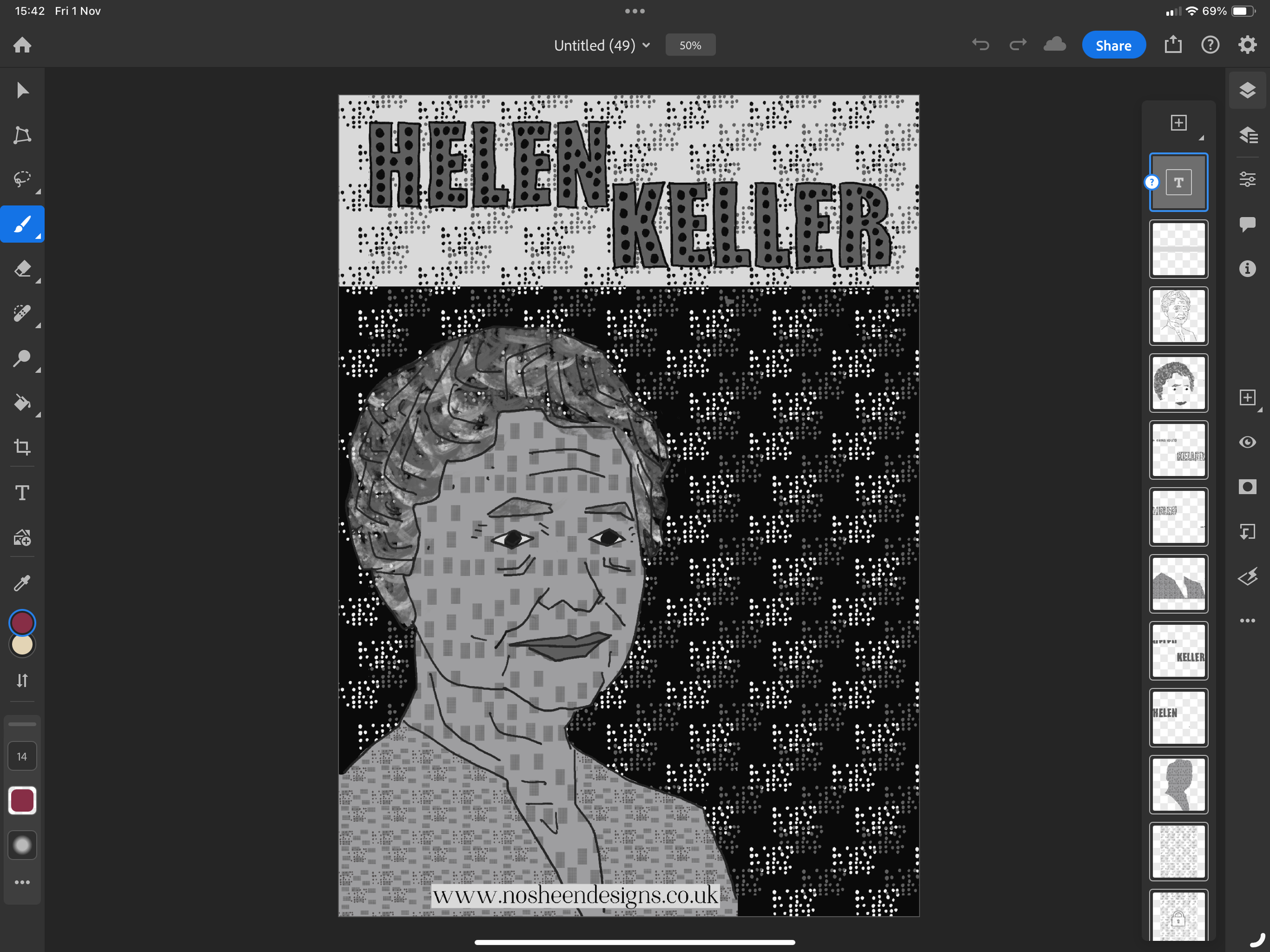
Drawing People: Studies in Observation and Character
Not every drawing needs a grand narrative or a historical legacy attached to it. Sometimes illustration is simply about looking closely - at a face, a gesture, a mood, or the quiet personality that sits beneath expression.
Alongside my commissioned and conceptual work, I regularly draw people with no fixed brief or outcome in mind. These portraits are a space for experimentation, curiosity and observation.
Why I draw people without a brief
These drawings allow me to:
explore different faces, ages and expressions experiment with colour, line and texture
respond intuitively rather than conceptually
stay connected to the human side of illustration
Without the pressure of a final outcome, the focus shifts to mark-making, empathy and noticing small details — the tilt of a head, a look held for a moment, the way personality can come through a few lines.
Process and approach
All of these portraits are hand drawn. I work with loose lines, layered textures and imperfect marks, allowing the drawing to remain open and expressive rather than tightly controlled.
Some pieces begin with:
quick observational sketches
imagined characters
people glimpsed briefly on public transport
or studies from reference, used loosely rather than literally The aim isn't accuracy alone, but character.
What these drawings are (and aren't)
These works aren't intended as commissioned portraiture or likeness-driven illustration. Instead, they sit somewhere between:
character development editorial illustration
visual storytelling
They often inform my book and editorial work later - helping me loosen my hand, build confidence in expression, and develop visual language that feels natural and human.
Why this matters in my wider practice
Illustration, especially for books, relies on empathy. Being able to suggest emotion, personality and presence is just as important as composition or concept.
These studies keep that muscle active.
They remind me that illustration doesn't always need to explain everything — sometimes it just needs to feel true.
Closing
These drawings are a quiet but important part of my practice. They feed into the way I approach narrative, character and emotion across book covers, editorial projects and personal work.
If you're interested in illustration that values humanity, observation and emotional connection, you can explore more of my work here: